Does Virtual IOP or Online Rehab Actually Work?
Virtual intensive outpatient programs and online rehab became a mainstream option during the COVID pandemic, when in-person treatment was suddenly limited or impossible. What started as an emergency pivot has now become a permanent part of the treatment system. Some programs are entirely virtual. Others blend online and in-person components. And the critical question, which the research has now had enough time to begin answering, is whether virtual IOP actually works as well as in-person treatment.
The short answer is: yes, for the right people and under the right conditions, virtual IOP produces outcomes comparable to in-person care. The longer answer involves understanding who benefits most, what the real limitations are, and what to look for in a quality online program.
What the Research Shows
- Multiple studies show virtual IOP is as effective as in-person IOP for alcohol and opioid use disorders in motivated, stable patients
- Retention rates in virtual IOP are comparable to or slightly higher than in-person programs
- Virtual programs eliminate geographic and transportation barriers
- They are less effective for people who need the physical structure of being away from home
- They are not appropriate replacements for residential care when that level of treatment is clinically indicated
What Virtual IOP Actually Is
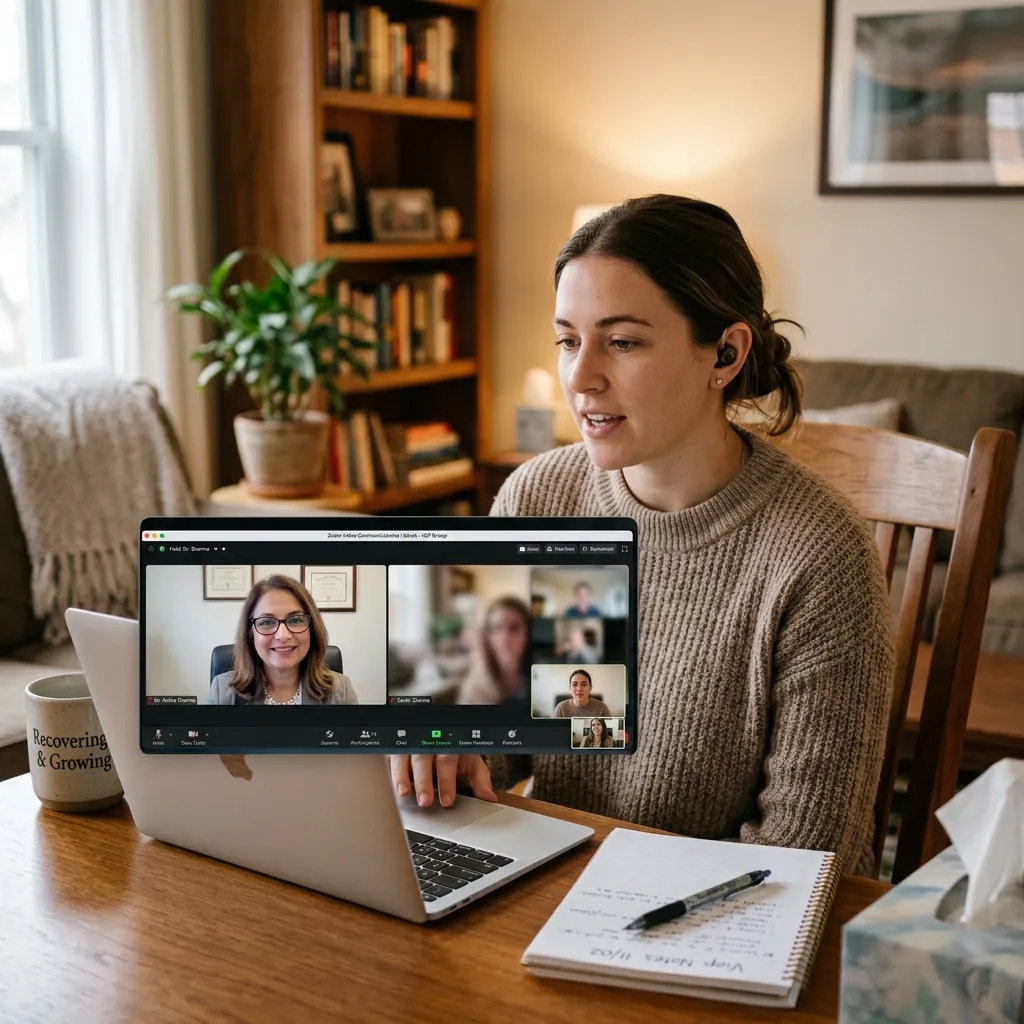
Virtual intensive outpatient programs (virtual IOP) deliver the same core services as in-person IOP through video platforms: group therapy, individual therapy, medication management, and psychoeducation. The typical schedule mirrors traditional IOP: 3 hours of programming per session, three to five sessions per week, for 8 to 16 weeks.
Participants connect through secure, HIPAA-compliant video platforms. Group sessions bring together 6 to 12 people online simultaneously, facilitated by a licensed therapist. Individual sessions are scheduled separately. Some programs also include asynchronous components, such as online coursework, journaling platforms, and peer message boards that allow engagement between live sessions.
This is different from “online rehab” that refers to self-directed apps or pre-recorded courses without live clinician interaction. Those products exist, but they are not the same as virtual IOP and should not be confused with clinical treatment.
The Evidence Base for Virtual IOP
The most rigorous comparison of virtual and in-person IOP was a 2022 randomized controlled trial published in JAMA Psychiatry. Researchers compared adult patients with alcohol use disorder randomly assigned to either virtual IOP or in-person IOP. At the 12-month follow-up, percentage of days drinking and alcohol use disorder symptom severity did not differ significantly between groups. Dropout rates were statistically identical.
A 2023 systematic review published in Drug and Alcohol Dependence examined 14 studies of telehealth-delivered substance use disorder treatment across multiple substances and settings. The review concluded that telehealth treatment achieved equivalent outcomes to in-person care on abstinence rates, treatment retention, and patient satisfaction across most populations studied, with the caveat that people requiring medical detox or with serious psychiatric instability had better outcomes in face-to-face settings.
“The evidence base for telehealth-delivered substance use disorder treatment has strengthened substantially. For appropriate candidates, virtual IOP is no longer an experimental option. It is a validated clinical modality.” — American Society of Addiction Medicine Telehealth Policy Statement, 2023
Who Does Virtual IOP Work Best For?
The evidence strongly supports virtual IOP as an effective option when the following conditions are true:
- Medical stability: The person does not require medical monitoring for withdrawal
- A safe home environment: Home is not a trigger-saturated or substance-present environment
- Reliable internet and a private space: Poor connectivity or no private room significantly undermines participation in group therapy
- Motivation and self-direction: Virtual programs require more self-discipline to attend and engage without the physical commitment of going to a facility
- Geographic barriers to in-person care: Rural patients, people without reliable transportation, and those in areas with few in-person options benefit the most
- Work or childcare constraints: People who cannot leave home or work for extended periods can access treatment they otherwise could not
Limitations of Virtual IOP
Not a Substitute for Residential Care
Virtual IOP cannot replicate the complete environmental separation that residential treatment provides. For people whose primary treatment barrier is their living environment, or who need the structure of being physically removed from daily life, virtual IOP will not fill that gap. The research does not show virtual IOP as equivalent to residential care. It shows it as equivalent to in-person IOP, which is a different level of care.
Therapeutic Alliance Differences
Some clinical research suggests the therapeutic alliance (the quality of the relationship between therapist and patient) can be slightly harder to build through a screen, particularly in early sessions. Patients who struggle with interpersonal connection may need more deliberate effort from both themselves and their clinician to develop the working relationship that makes therapy effective. Good therapists have adapted to this, but it is worth acknowledging.
Group Dynamics Are Different
One of the documented therapeutic benefits of IOP is the peer connection formed in groups. The bonds formed in an in-person group, sharing a physical space, sometimes sharing silences, often translating into real-world recovery support, are harder to replicate entirely through video. Virtual groups can develop genuine cohesion, but it requires more facilitation skill and time than in-person groups.
Technology Access and Equity
Not everyone has reliable broadband internet, a private place to take a video call, or a smartphone with a functional camera. These access gaps mean virtual IOP creates equity issues in communities with limited technology access, even as it removes geographic barriers for others.
What to Look for in a Quality Virtual IOP Program
Not all virtual IOP programs are created equal. These features distinguish clinically sound programs from programs that use the language of evidence-based care without delivering it:
- Licensed clinicians: Therapists running groups should be licensed (LCSW, LPCC, LMFT, or equivalent). Prescribers should be licensed physicians or nurse practitioners with addiction training.
- Live, synchronous sessions: Group therapy should happen in real time, not through pre-recorded video.
- Evidence-based modalities: Look for cognitive behavioral therapy, motivational interviewing, and/or dialectical behavior therapy as the therapeutic foundation.
- Individualized treatment planning: A quality program assigns you a primary therapist and develops a specific treatment plan for your needs, not a one-size-fits-all curriculum.
- Medical component: If you are on medication-assisted treatment, the program should include prescriber access and medication management.
- Accreditation: Look for CARF or Joint Commission accreditation, which indicates the program has met independent quality standards.
- HIPAA compliance: The platform used for video sessions should be HIPAA-compliant, not a standard consumer video service.
Questions to Ask Before Enrolling
- How many hours of live treatment do I receive per week?
- How many people are in each group session?
- What are the credentials of the therapists who run groups?
- How often will I meet individually with a primary therapist?
- Is medication management available if I need it?
- What is your completion rate and 6-month sobriety rate?
- Do you accept my insurance?
- Is the program accredited?
The Verdict on Virtual IOP
Virtual IOP works. For people who are medically stable, have a safe home environment, and cannot access or sustain in-person IOP due to geographic or logistical barriers, it delivers comparable clinical outcomes and significantly expands access to care.
It is not the right fit for everyone. It is also not the highest level of care. But framing it as a lesser option misses the point. For the population it serves well, virtual IOP is not a compromise. It is the treatment that actually makes recovery possible when in-person care is not a realistic option.
If you are considering virtual IOP, ask the right questions before enrolling, verify the clinical credentials, and confirm your insurance covers it. Most major commercial insurers now cover telehealth IOP on par with in-person IOP under mental health parity requirements.